What is an epoxy floor coating?
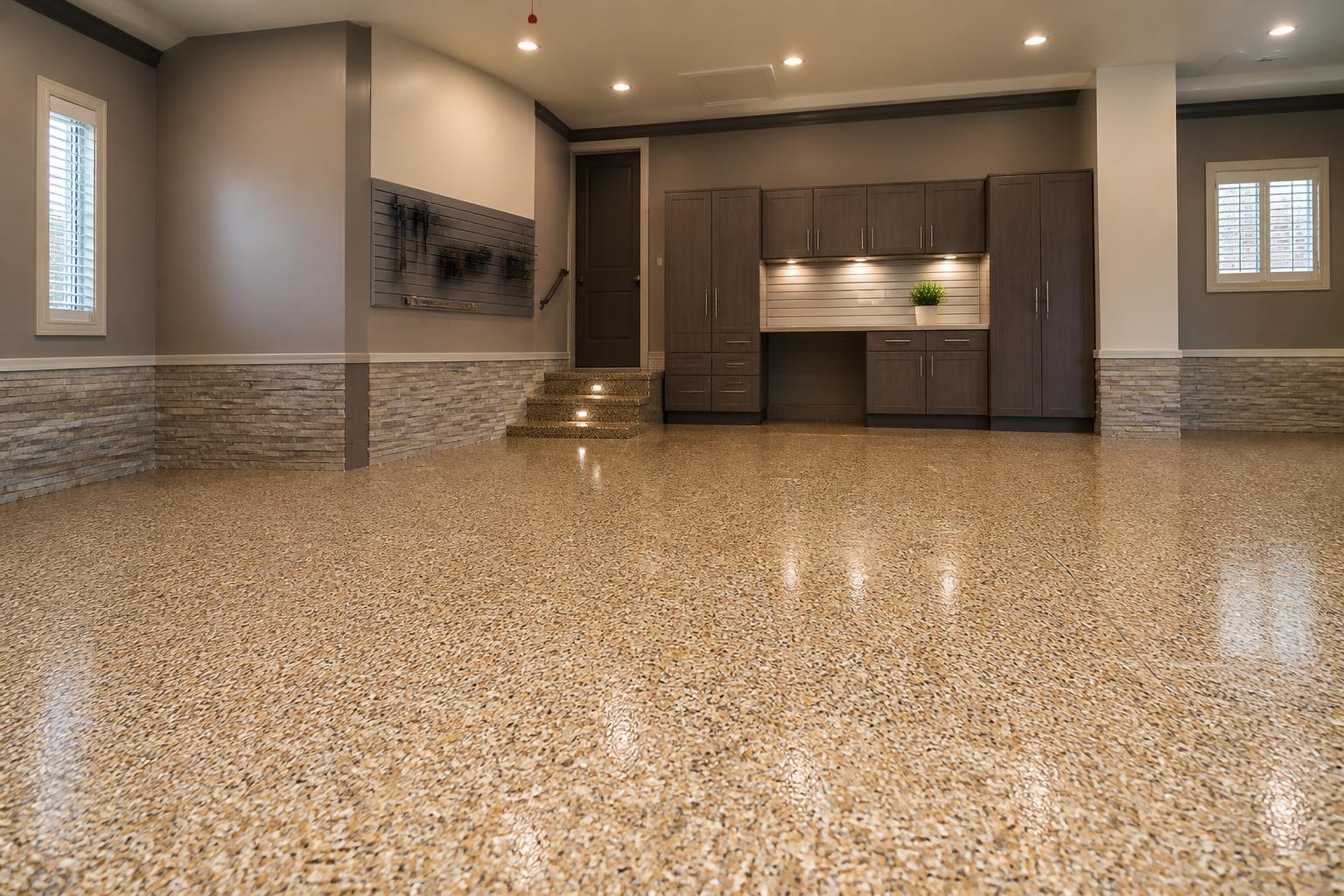
An epoxy floor coating is a multi-layer resin system bonded to concrete. Unlike paint, which sits on top and peels, a professional coating is applied to diamond-ground concrete so it mechanically locks into the surface. The result is a thick, seamless, glossy floor that resists oil, chemicals, water and abrasion.
"Epoxy" has become shorthand for the whole category, but modern systems usually combine resins: an epoxy base coat for adhesion and build, decorative flake or metallic pigment, and a clear polyaspartic or urethane topcoat for UV stability and scratch resistance. Our guide to epoxy vs. polyaspartic explains the difference.
Types of floor coating systems
Full-broadcast flake
The most popular choice for garages. Colored vinyl flake is broadcast into the base coat to full coverage, then sealed. It hides dirt, adds texture and comes in dozens of blends.
Metallic epoxy
Pearlescent pigments create a flowing, marble-like floor. It's a showpiece finish for showroom garages, basements, offices and retail. Compare it in flake vs. metallic epoxy floors.
Solid-color epoxy
A clean, durable, budget-friendly option for workshops, utility rooms and commercial back-of-house areas.
Polyaspartic topcoats
UV-stable, abrasion-resistant and fast-curing. They prevent yellowing and resist hot-tire pickup — a must for Georgia garages that get afternoon sun.
Where floor coatings work best
Any sound, interior or covered concrete slab can be coated. The most common spaces we coat around Buford and Northeast Georgia:
- ▸Residential garages — one-, two- and three-car
- ▸Workshops, man caves and hobby spaces
- ▸Basements and home gyms
- ▸Utility, laundry and mud rooms
- ▸Showrooms, offices and light commercial spaces
Why prep is everything
Nearly every peeling garage floor has the same root cause: poor surface prep. Acid etching and rolling a thin coat — the DIY-kit approach — doesn't give the coating anything to grip. We diamond-grind every slab to open its pores, vacuum the dust, fill cracks and pits, and check for moisture before the first coat.
Prep is standard on every garage epoxy coating we install, never an add-on.
Our installation process
A typical residential garage is completed in about one to two days:
- ▸Walkthrough, measurements, moisture check and color selection
- ▸Diamond grinding and dust-controlled vacuuming
- ▸Crack, pit and spall repair
- ▸Epoxy base coat and decorative flake or metallic layer
- ▸Scrape, vacuum and clear UV-stable topcoat
- ▸Walk-on in hours, park in about a day with a polyaspartic topcoat
What affects the cost?
Price is driven by square footage, slab condition, the system you choose and add-ons like cove base or steps. Removing an old coating or treating moisture adds prep time. Our garage floor coating cost guide breaks down each factor and the questions to ask when comparing quotes.
Caring for your coated floor
Sweep weekly, mop monthly with a pH-neutral cleaner, and wipe up spills promptly. Avoid acidic and abrasive cleaners. That's it. Read the full routine in how to maintain an epoxy floor.
Local floor coating service across Northeast Georgia
We're based in Buford and coat floors throughout Gwinnett, Hall, Forsyth, Barrow and Jackson counties. Georgia's humidity, red clay, pollen and summer heat are exactly why we favor ground prep and UV-stable topcoats. Find your town below for local details.
Frequently asked questions
How long does an epoxy floor coating last?
+
A professionally ground, multi-layer system typically lasts many years in a residential garage. Topcoats can be refreshed in high-traffic lanes without redoing the whole floor.
Can you coat a garage with cracks?
+
Yes. Cracks and pits are filled during prep. A slab with major movement or heaving may not be a candidate — we'll tell you honestly.
How soon can I use my garage?
+
Usually foot traffic within hours and parking in about a day with a polyaspartic topcoat.
Is a coated floor slippery?
+
Flake floors have natural texture. We can add slip-resistant grit to any topcoat.
Do you coat outdoor concrete?
+
Exposed outdoor slabs are better served by overlays and stains — see our concrete resurfacing services.