A big share of our garage floor work starts the same way: a homeowner rolled on a store-bought epoxy kit, it looked decent for a season, and now it's peeling under the tires. We end up grinding the failed kit off and starting over.
If you're weighing a kit against a professional floor, here's an honest look at why kits fail — and what a professional system does differently. It's part of our epoxy floor coatings hub.
Reason 1: Acid etching instead of grinding
Kits tell you to acid-etch the floor. Etching lightly textures the surface, but it doesn't remove the weak top layer of paste, old sealers or contaminants, and it leaves residue that can interfere with bonding. Coatings bond to what they touch — if they touch a weak surface, they come off with it.
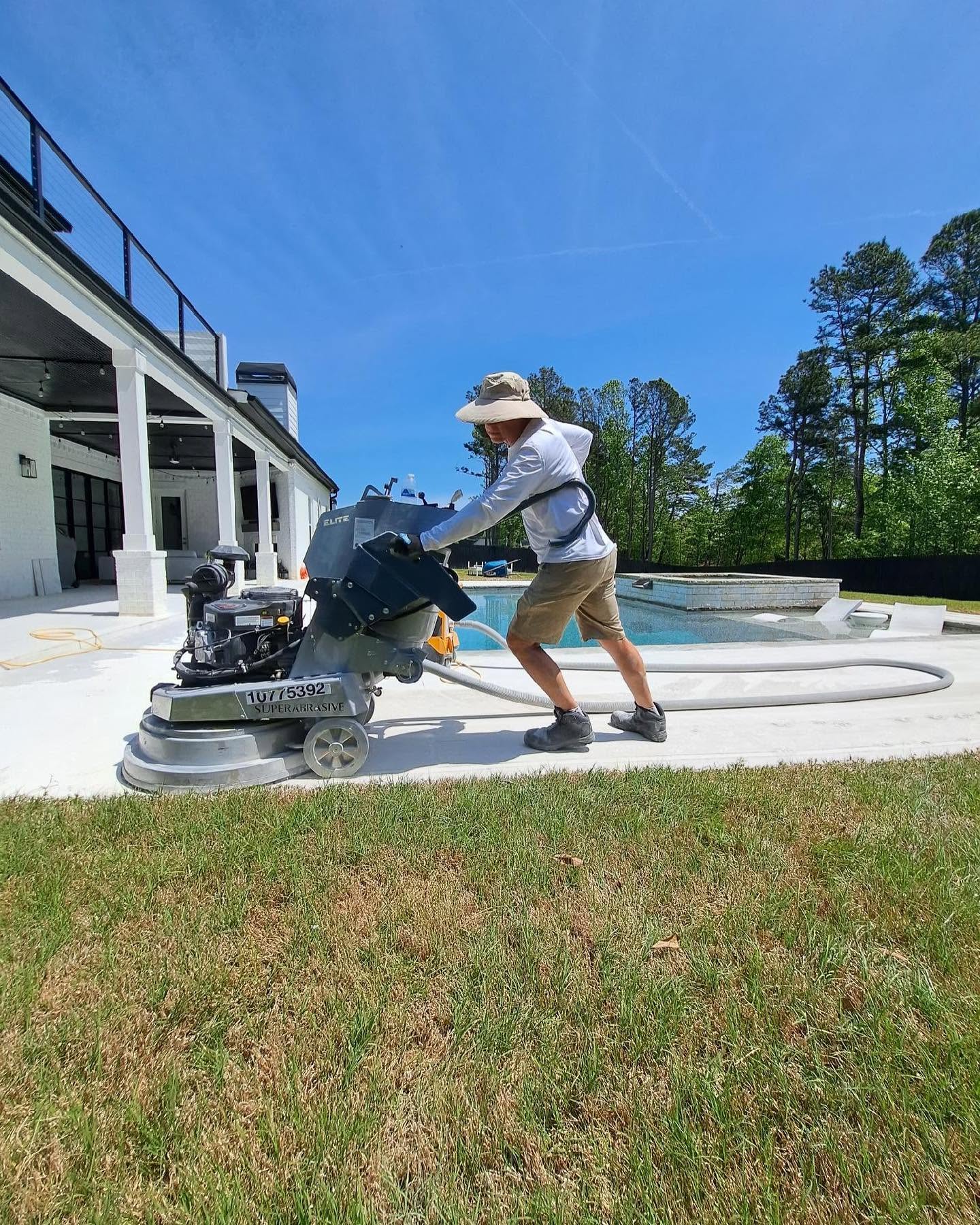
Professional prep is mechanical: diamond grinding opens the concrete's pores and removes anything weak or contaminated. It's dusty, loud work that requires industrial equipment — which is exactly why kits skip it.
Reason 2: Thin, water-based resin
Most kit epoxy is water-based and low in solids. When the water evaporates, the cured film is thin — often a fraction of the thickness of a professional 100%-solids base coat. Thin films wear through fast and offer little protection to the slab.
Reason 3: Hot-tire pickup
Drive on I-985 in July and your tires get hot. Park on a thin or poorly bonded coating and the heat softens it; when the tires cool, they contract and pull the coating off the floor. Those two bare patches where you park are the classic DIY-kit failure pattern.
A UV-stable polyaspartic topcoat is highly resistant to hot-tire pickup — one reason we finish our floors with it. See epoxy vs. polyaspartic.
Reason 4: Georgia humidity and cure conditions
Coatings are chemistry, and chemistry cares about temperature and moisture. Northeast Georgia's humid summers and cool winter slabs both interfere with curing when conditions aren't managed. Professionals measure slab temperature and dew point and choose products and timing accordingly.
Reason 5: No crack or defect repair
Kits roll straight over cracks and pits. Those defects telegraph through the thin film and become failure points. Professional prep includes filling and leveling cracks and surface defects before any coating goes down.
The math on doing it twice
A failed kit has to be ground off before a new system can bond — that's extra labor on top of the kit you already paid for. In most cases, doing it professionally the first time costs less than kit-plus-removal-plus-redo. Our garage floor coating cost guide explains what drives a professional quote.
Already have a peeling kit? We remove failed coatings as part of prep on every garage epoxy coating we install.
Frequently asked questions
How long does a DIY garage floor kit last?
+
Commonly one to three years before peeling, especially under hot tires. Professionally prepped and coated floors last many times longer.
Can you coat over my old DIY kit?
+
No — a failing coating must be ground off completely. We include that removal in prep.
Are all DIY products bad?
+
The resin in some kits is decent; the weak link is almost always prep. Without mechanical grinding, even good resin can't bond properly.