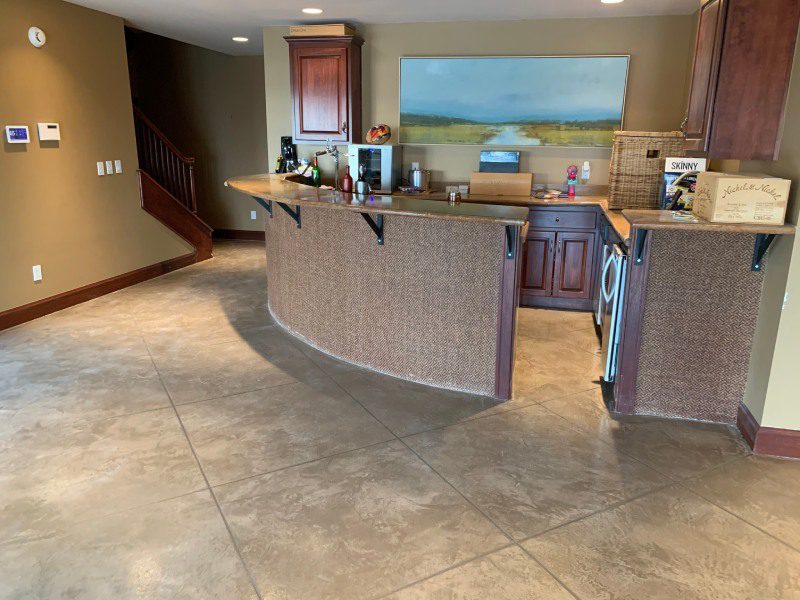
Basements across Northeast Georgia sit on concrete slabs that were never meant to be seen — dusty, stained, and cold-feeling. Carpet and laminate trap moisture and musty smells. A professionally coated basement floor solves all of it: a seamless, easy-clean surface that turns the basement into real living space.
Here's what to know before coating a basement floor. This guide is part of our epoxy floor coatings hub.
Why coatings beat carpet and laminate below grade
Basements are the most moisture-prone rooms in the house. Carpet pads hold humidity and grow musty; laminate and vinyl plank can swell or grow mold underneath when vapor comes up through the slab. A bonded coating has no fibers, no seams and no hollow gaps — nothing for moisture to hide in.
It also keeps the floor height low, so you don't lose headroom the way you do with sleepers and subfloor panels.
- ▸No fibers or padding to trap moisture and odors
- ▸Seamless surface that mops clean
- ▸No lost ceiling height
- ▸Works over the existing slab — no tear-out
Moisture: the one thing we always test
Every basement slab transmits some water vapor. Before we coat, we test the slab's moisture level. Most Georgia basements are fine with a standard system; slabs with higher vapor transmission get a moisture-mitigating primer first.
A coating handles normal slab vapor, but it isn't a fix for active water intrusion. If water seeps through walls or the floor during storms, that drainage issue needs to be solved first — and we'll tell you honestly if we see signs of it.
Flake or metallic for a basement?
Both work beautifully indoors. Full-broadcast flake gives a warm, speckled, granite-like finish that hides dust and adds grip — great for playrooms, laundry areas and workshops. Metallic epoxy creates a flowing, marbled showpiece floor for media rooms, bars and home gyms. We compare the two in detail in flake vs. metallic epoxy floors.
Because basements see little direct sun, yellowing is less of a concern than in a garage — but we still finish with a quality clear topcoat for abrasion resistance. Read why in epoxy vs. polyaspartic.
Comfort and temperature
A coated floor stays close to slab temperature, which in a Georgia basement means cool in summer and mild in winter. Area rugs soften seating zones. What you gain is a floor that never harbors allergens, never smells musty, and cleans with a dust mop.
What the process looks like
1. Grind and repair
We diamond-grind the slab, fill cracks and pits, and check moisture.
2. Base coat and design
Epoxy base coat, then flake broadcast or metallic pigments, depending on the look you choose.
3. Clear topcoat
A durable clear coat seals everything in. Foot traffic is usually fine within a day or two.
Keeping it looking new
The routine is simple: dust-mop weekly, damp-mop with a pH-neutral cleaner as needed. Our epoxy floor maintenance guide has the full routine. Ready to talk about your basement? See our garage and interior epoxy coatings page or request a free estimate.
Frequently asked questions
Can you coat a damp basement floor?
+
We test moisture first. Normal slab vapor is handled with the right primer; active water intrusion must be fixed before any coating.
Is a coated basement floor cold?
+
It stays near slab temperature — cool in summer, mild in winter. Area rugs add warmth where you sit.
How long does a basement coating take?
+
Most basement floors take two to three days from grinding to topcoat, depending on size and the system chosen.