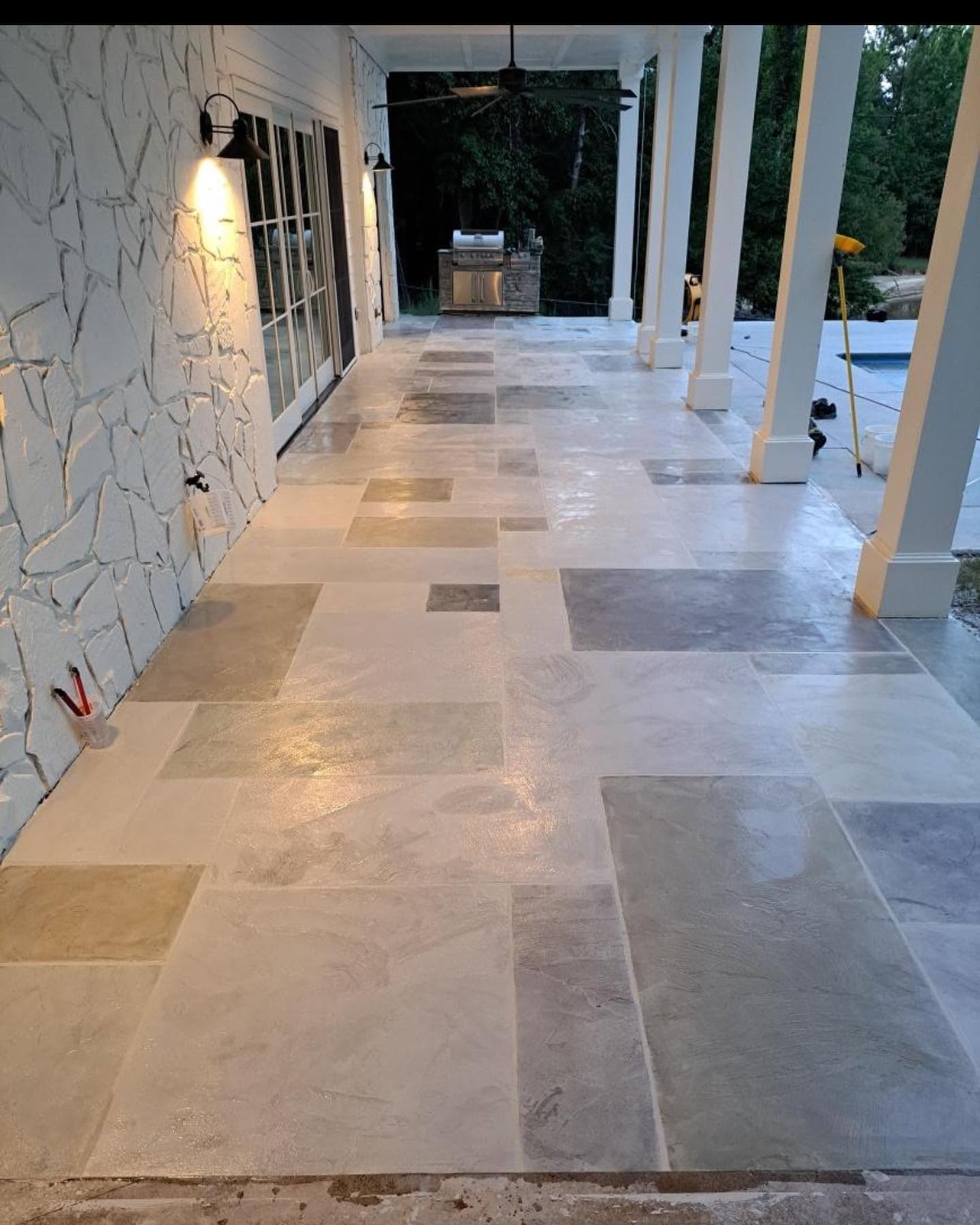
Ugly concrete doesn't always mean bad concrete. Many patios, pool decks and driveways around Northeast Georgia are structurally fine underneath — they just have a worn, stained or crazed top surface. Those slabs are ideal for resurfacing, which costs far less and causes far less disruption than tearing out and re-pouring.
We only do resurfacing and refinishing — we don't pour new slabs — so we'll give you an honest read on which one your concrete needs. Learn more on our concrete resurfacing hub.
What resurfacing actually is
Resurfacing means bonding a new, thin wearing surface to your existing concrete. The slab is cleaned and mechanically profiled, cracks are treated, and a polymer-modified cement overlay, microtopping, texture or stain is applied. The structure stays; the surface is brand new.
Because there's no demolition, there's no jackhammering, no dumpster, and no weeks of a torn-up yard.
Signs your slab is a good resurfacing candidate
- ▸Surface scaling, flaking or light spalling
- ▸Fine hairline cracks or crazing
- ▸Faded, stained or discolored concrete
- ▸Rust, leaf or tire stains that won't pressure-wash out
- ▸Dated, plain gray concrete you'd like to upgrade
- ▸Slippery, smooth pool decks that need texture
Signs resurfacing is NOT the right fit
An overlay mirrors what's underneath it. If the slab itself is moving, the new surface will crack along with it. We'll tell you plainly if we see any of these:
- ▸Sections that have heaved, sunk or tilted significantly
- ▸Large, wide cracks with uneven edges (one side higher than the other)
- ▸Crumbling concrete that breaks apart when probed
- ▸Active drainage or erosion undermining the slab
Resurfacing vs. replacement at a glance
- ▸Cost — Resurfacing: typically a fraction of tear-out. Replacement: demolition, hauling and new concrete.
- ▸Time — Resurfacing: usually a few days. Replacement: often weeks including cure time.
- ▸Disruption — Resurfacing: minimal. Replacement: heavy equipment, yard damage.
- ▸Design options — Resurfacing: stamped patterns, stains, textures, colors. Replacement: plain unless decorative work is added.
- ▸Requirement — Resurfacing: a structurally sound slab. Replacement: none.
Georgia soil and why so many slabs look worse than they are
North Georgia's red clay expands when wet and shrinks during dry spells. That movement, plus hot summers and occasional freeze-thaw nights, stresses the top of the slab first. The result is crazing, flaking and discoloration — surface problems — on slabs that are otherwise solid.
That's why resurfacing is such a good fit here. See how it applies to specific surfaces on our pool deck resurfacing guide and our guide to refinishing faded and spalled driveways.
Get an honest assessment
When we visit, we check for movement, moisture and hollow spots before recommending anything. If your slab isn't a resurfacing candidate, we'll say so. If it is, we'll show you overlay, stain and texture options — explore patio resurfacing, pool deck resurfacing and driveway resurfacing.
Frequently asked questions
How long does resurfaced concrete last?
+
On a stable slab with proper prep and periodic resealing, a quality overlay lasts many years.
Can you resurface over cracks?
+
Hairline and minor cracks are treated during prep. Large structural cracks with vertical displacement mean the slab isn't a good candidate.
Do you replace concrete if resurfacing won't work?
+
No — we specialize in refinishing only. We'll tell you honestly so you can call a concrete replacement contractor.